

By Laura Onyeneho
In a political moment where everything from voting rights to reproductive freedom is under attack, actor and activist Kendrick Sampson is building infrastructure.
As co-founder of the nonprofit BLD PWR, Sampson is building a central hub where Black communities can come together, share resources and organize for liberation and resistance, while also celebrating their joy.
This effort is designed to establish lasting structures that unite people and address the ongoing challenges of the current social and political landscape.
“Black people are tired. And we should be,” Sampson said. “But that doesn’t mean we stop. It means we need to organize differently around what heals us, not just what hurts us.”
Moving from Reaction to Strategy

Outside of his celebrity, Sampson consistently returns to his roots in Houston to leverage his platform and his love for the arts, music, film and storytelling to shift culture for good. For Sampson, that means reclaiming control over the things that are often exploited.
He did that by hosting his first BLD PWR DAY, a two-day event that coincided with Juneteenth and celebrated Black liberation, joy and community in Houston. The event included a block party, film screenings, panels and a club karaoke party.
“People outside Texas are making money off of our culture, our music, our fashion, our language. Meanwhile, the people who made that culture are under-resourced,” he said. “We can’t keep letting that happen. We can build our own systems with the genius we already have.”
At BLD PWR gatherings, you’ll find DJs and line dancing alongside youth organizing and open forums on mental health, policing and reproductive justice.

Monica Simpson, executive director of SisterSong, the leading reproductive justice collective for women of color, has been a key BLD PWR partner. For her, the project is about filling the biggest gap in current movement work.
“Our communities are facing overlapping crises, but we’re often working in silos,” Simpson said. “Reproductive rights over here. Economic justice over there. But we don’t live single-issue lives. And our movements can’t either.”
That’s why BLD PWR doesn’t silo its programming. Its model is deliberately intersectional, grounding the experience of Black people across gender, class and identity in shared strategy.
“If you care about voting rights, you also have to care about reproductive freedom. About housing. About mental health,” Simpson said. “We’re in this together.”
Simpson shared that “Joy as resistance” isn’t just a catchphrase. It’s the medicine the community needs at this time.
“ If our communities are inflamed with grief and burnout, joy cools us down,” she said. “It restores us so we can keep fighting.”
That healing function is embedded in everything BLD PWR DAY creates, from its DJ-led open mics to its “Living Room Experience,” where people gather in relaxed, home-like spaces to have raw conversations about politics, trauma and solutions.
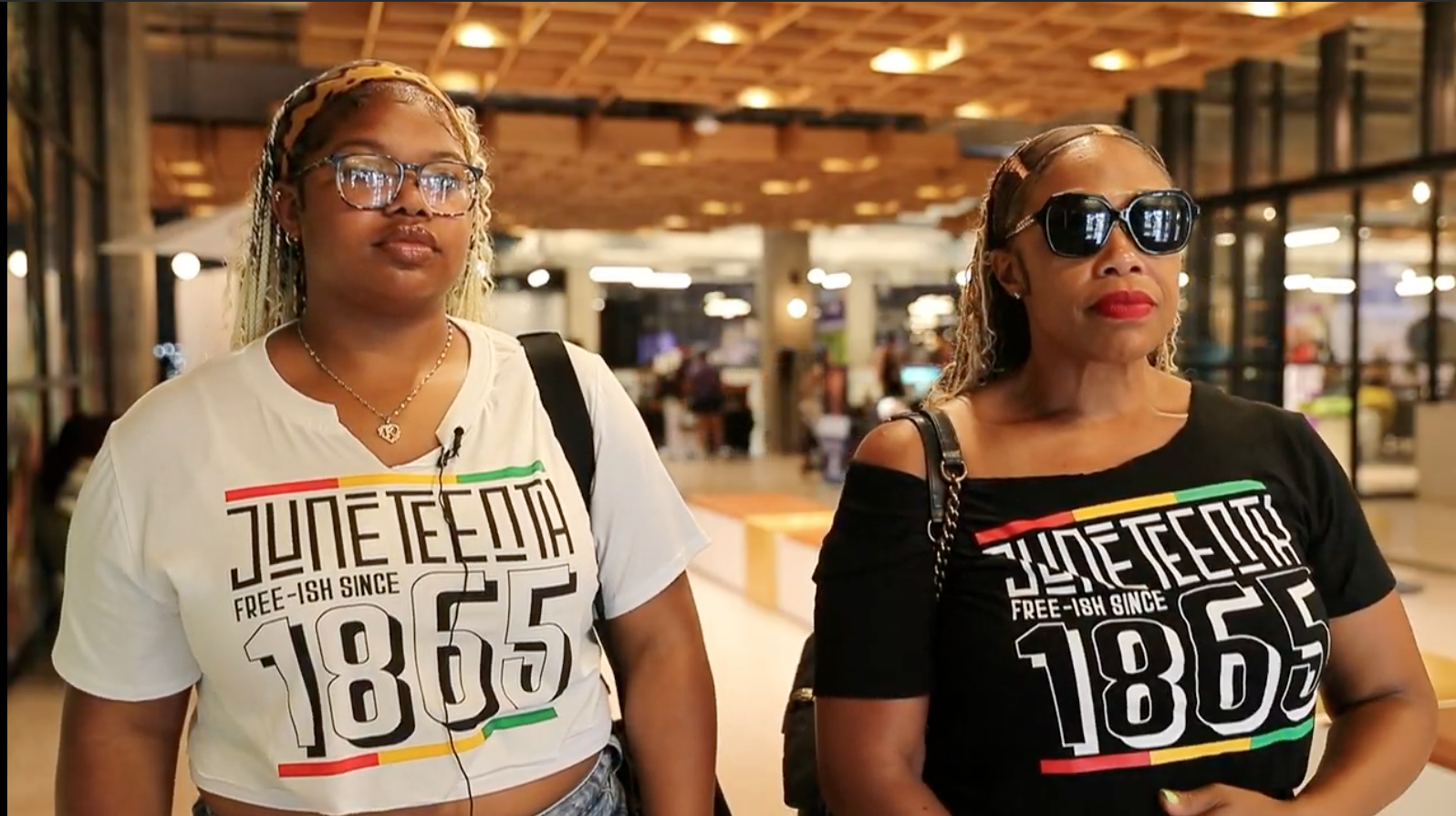
Ohio-based high school student Kamdyn West flew to Houston to attend BLD PWR DAY. She felt it was important for her to be present because of what’s happening in schools nationwide.
“I don’t really learn Black history at school,” she said. “Mostly, I find things online. But this, being here, talking to people, I’ve learned a lot.”
She hopes more young people find their way into these spaces. “We need more of us showing up. More real conversations. Not just scrolling,” she said.
That’s exactly what Simpson is counting on; young people are not just inheriting old strategies but creating new ones.
“They are our next organizers, our next architects,” she said. “They need to know the history, but also feel free to design a different future.”
