


By Aswad Walker
The Voting Rights Act (VRA), signed into law in August 1965, is often called the most effective piece of legislation in U.S. history.
Yet, as the nation marks its 60th anniversary, the landmark law may not live to see 61.
Once thought untouchable, the VRA is now on the chopping block, under attack from conservative lawmakers, right-wing billionaires and a U.S. Supreme Court increasingly hostile to voting rights protections.
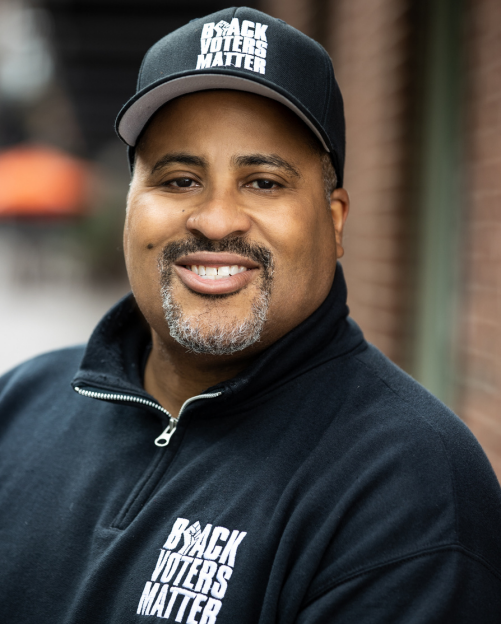
Cliff Albright, co-founder of Black Voters Matter, put it bluntly.
“The Voting Rights Act is in grave danger… It’s on the verge of being killed, murdered, whatever verb you want to use,” said Albright. “There have been people, ever since it was passed 60 years ago, trying to do away with it. One of those people is actually John Roberts, who’s currently the Chief Justice of the Supreme Court.”
For many, the thought of the VRA’s demise seemed impossible—just as Roe v. Wade once seemed secure, or as Affirmative Action once appeared permanent. Today, those pillars of progress have fallen. The VRA could be next.
Under Attack Since Day 1
The VRA was never universally accepted. As Albright reminds us, “The reason why it’s been under attack since 1965 is the same reason that it took so long to even get the act passed… There have been people who never felt that democracy should extend to Black folks in this country.”
The Supreme Court’s 2013 Shelby County v. Holder decision gutted the VRA’s preclearance provision, which required states with histories of racial discrimination to get federal approval before changing election laws. That opened the door to a wave of restrictive laws in Texas and other Southern states.
Since then, the attacks have only intensified.
“Now they’re looking at getting rid of the parts of the Voting Rights Act that basically give any kind of teeth to the ability to deal with racial gerrymandering,” Albright explained. “We could be looking at the last days and weeks of what many have called the most effective legislation this country has passed.”
A joint statement by Derrick Johnson, NAACP president and CEO, and Texas NAACP President Gary Bledsoe underscores the urgency: “Alabama authorities blatantly ignored the Supreme Court’s directive to create a minority opportunity district. Across the nation, including Texas, efforts to dismantle minority-held electoral seats have emerged in Baytown, Galveston, Tarrant County, Fort Bend County and even the Texas Legislature.”

Apathy Not the Issue
Some argue that the rollback of voting rights is compounded by voter apathy. Albright rejects that narrative.
“We at Black Voters Matter don’t refer to it as apathy,” stated Albright. “Because apathy, by definition, presumes the absence of passion. And in our experience, even when folks aren’t voting, it’s not because they’re not passionate. They’re frustrated because they don’t see the system producing the things they’re passionate about.”

That frustration, however, plays into the hands of those seeking to suppress Black and Brown political power. Gerrymandering, purges of voter rolls and restrictive ID laws become even more effective when disillusionment drives down turnout.
Senior fellow at Texas Southern University’s Barbara Jordan Institute Dr. Carla Brailey said, “I really think that we have never really arrived at experiencing full democracy. But the Voting Rights Act was creating a path for us with at least some hope of moving forward. If the Voting Rights Act just disappears, I don’t even want to really think about that.”
Implications
Nowhere are the implications more visible than in Texas. The state operates under a discriminatory congressional map, as Johnson and Bledsoe explain: “White voters control 28 of 38 districts, despite being only 40% of the population. Black and Brown voters influence outcomes in just 10 districts. Recent legislative initiatives targeted four minority opportunity districts, eliminating three.”
This imbalance means white voters will decide 81% of Texas’ congressional seats, though they make up less than half of the state’s residents. For Black and Latino Texans, this is not just about fair maps—it’s about whether their voices matter at all.
The stakes extend beyond Texas. If the VRA collapses, the nation faces a deepening democratic crisis. As Brailey warns, “I believe that it’s not just the Voting Rights Act that is on the line. I really think democracy is on the line.”
Solutions
Despite the grim outlook, leaders stress that the fight is not over. Albright reminds us that the VRA itself was not won at the ballot box but through organizing and sacrifice.
“Folks in Selma didn’t vote for the Voting Rights Act. Folks in Selma had to march and fight for the Voting Rights Act,” stated Albright.
Here are steps citizens and organizations can take:
- Join organizations: Whether it’s the NAACP, Black Voters Matter or a neighborhood association, collective power is essential.
- Engage in conversations: Talk to family, friends and neighbors about voting rights, connecting issues like healthcare, wages and safety to gerrymandering and suppression.
- Counter disinformation: Ensure communities get accurate information about voting rights and elections.
- Push for reforms: Support legislation at the state and federal levels that protects voting rights and challenges discriminatory maps.
- Mobilize beyond voting: Protest, litigate and organize to challenge suppression tactics. Voting is vital, but it’s only one tool in the struggle for full citizenship.
Dr. Brailey emphasizes unity and vision.
“We must unite in a way that we’ve got to believe in something together… More than anything, we need a people’s agenda, but we’re way overdue for a Black agenda,” stated Braily.